

Employment gaps are now a normal part of many careers. Changes in the job market, layoffs, and personal priorities all contribute to breaks in employment. Because of this, employers are more understanding than before.
Still, many candidates feel unsure when explaining gaps. The concern is not the gap itself. The real issue is how it is presented.
A clear and confident explanation can turn a concern into a strength. This guide will help you do exactly that.
What Is an Employment Gap
An employment gap is any period when you were not working in a full-time role. This gap can last a few months or several years.
Common Reasons for Employment Gaps
People step away from work for many reasons. Some of the most common include:
- Searching for a new job
- Company layoffs
- Health or personal matters
- Family responsibilities
- Freelance or project work
- Learning new skills or studying
Each reason is valid. What matters is how you explain it.
Are Employment Gaps a Problem
A gap becomes a problem only when it is unclear. Employers do not expect perfect timelines. They expect honesty and clarity.
A strong explanation removes doubt. A weak one creates it.
Why Employers Ask About Employment Gaps
Employers ask about gaps to understand your situation better. They are not trying to judge you. They want to reduce uncertainty.
What Employers Are Really Looking For
Hiring managers focus on a few key points:
- Are your skills still current
- Did you stay productive
- Are you ready to return to work
- Can you commit long-term
Your answer should address these concerns clearly.

The Best Way to Explain Employment Gaps
A simple structure makes your answer stronger and easier to follow.
Step 1: Acknowledge the Gap
Start by stating the gap clearly. Avoid trying to hide it.
Step 2: Explain the Reason Briefly
Keep your explanation short. Focus on facts, not emotions.
Step 3: Show What You Did
Highlight any learning, projects, or responsibilities.
Step 4: Emphasize Readiness
End by showing that you are ready to work again.
Example Answer
“I took time away from full-time work to focus on developing my skills. During that period, I completed courses and stayed updated in my field. I am now ready to apply those skills in a professional role.”
This answer works because it is clear and focused.
Types of Employment Gaps and How to Explain Them
Different gaps require slightly different approaches.
Job Search Gap
Finding the right role takes time. Explain that you stayed focused and improved your skills.
Example:
“I spent that time searching for a role that fits my goals while improving my skills.”
Layoff or Company Closure
This situation is common. Keep the tone neutral.
Example:
“My role ended due to company changes. After that, I focused on preparing for my next opportunity.”
Personal or Health Reasons
You do not need to share details. Keep it simple.
Example:
“I took time to handle a personal matter. It is now resolved, and I am ready to return to work.”
Family Responsibilities
This is widely accepted. You can highlight useful skills.
Example:
“I took time to support my family. That experience improved my organization and time management.”
Freelancing or Projects
This counts as real work. Present it with confidence.
Example:
“I worked on independent projects that helped me build my skills and gain practical experience.”
How to Explain Employment Gaps on Your Resume
Your resume should be clear and honest.
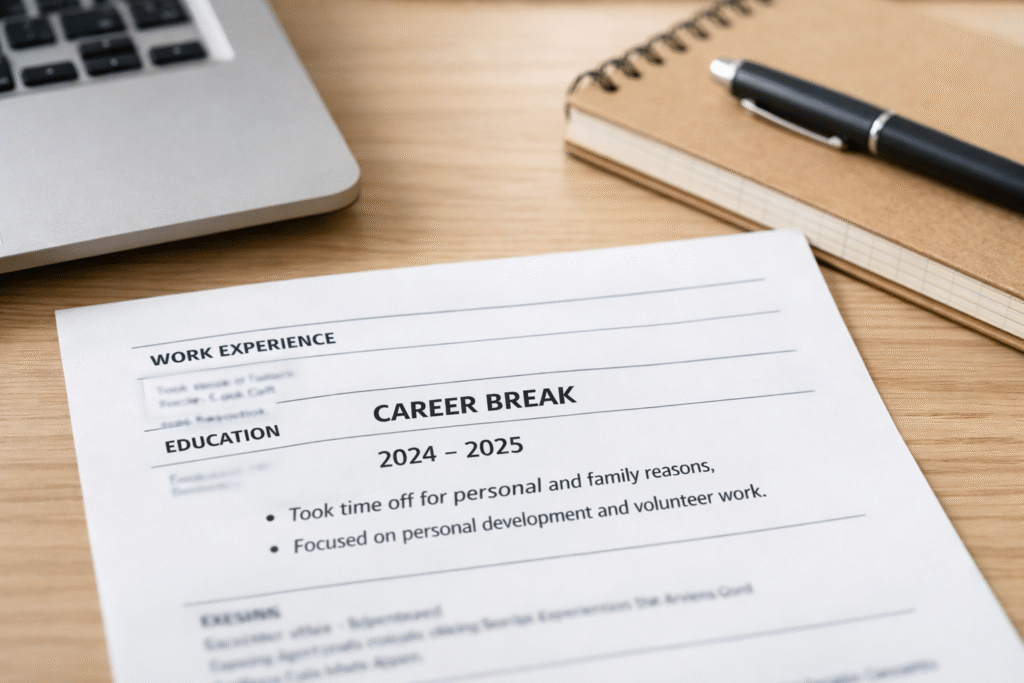
Use a Career Break Label
You can label the gap as a career break. Add a short description.
Example:
Career Break (2024–2025)
Focused on skill development and professional growth
Include Relevant Activities
List courses, certifications, or projects. This shows continued effort.
Focus on Skills
A skills-based format can help highlight your strengths instead of your timeline.
What Employers Expect From Your Answer
Clarity matters more than detail. Employers want to understand your situation quickly.
A strong answer is short, direct, and positive. It also shows that you are ready to move forward.
Confidence plays a big role. A calm tone can make your explanation more convincing.
Strong Answer Examples
Here are simple and effective responses:
For job searching:
“I focused on finding the right role and improving my skills during that time.”
For layoffs:
“My position ended due to company changes, and I used the time to prepare for my next role.”
For personal reasons:
“I handled a personal matter that is now resolved, and I am ready to return to work.”
Each answer keeps the focus on the future.
Common Mistakes to Avoid
Some mistakes can weaken your answer.
Avoid giving too much detail. Long explanations can confuse the interviewer.
Do not sound defensive. Stay calm and professional.
Never speak negatively about past employers.
Avoid saying that you did nothing. Always highlight something productive.
How to Turn Employment Gaps Into Strengths
A gap can show growth if presented well.
You may have learned new skills. You may have developed discipline or resilience.
Focus on what you gained during that time. This shifts the conversation in your favor.

Improving Your Confidence
Practice your answer until it feels natural. Do not memorize it word for word.
Keep your response within thirty to forty-five seconds. This shows clarity.
Speak at a steady pace. Maintain a calm tone.
Confidence comes from preparation.
For more career advice, explore these guides:
- Interview preparation guide: https://careerprepview.com/
- Interview questions and answers: https://careerprepview.com/blog/
- Resume writing guide: https://careerprepview.com/blog/
You can also improve your skills through these platforms:
- https://www.coursera.org/
- https://www.linkedin.com/learning/
- https://hbr.org/topic/career-planning
- https://www.indeed.com/career-advice
- https://www.glassdoor.com/blog/interview-tips/
Employment gaps are part of many careers. They do not define your value.
A clear and confident explanation can remove doubt and build trust.
Focus on growth, stay professional, and keep your answer simple. When you do this well, your gap becomes

Frequently Asked Questions (FAQs) About Employment Gaps
Are employment gaps bad for your career?
No, employment gaps are not automatically bad. In today’s job market, they are very common due to layoffs, career changes, freelancing, and personal reasons. What matters most is how you explain the gap and whether you show growth, learning, or productivity during that time.
How do employers verify employment gaps?
Answer:
Employers typically verify employment history through:
- Background checks
- Reference checks
- Employment verification services
They usually confirm dates of employment rather than deeply investigating gaps. However, inconsistencies or dishonesty can raise red flags.
How long of a gap is acceptable on a resume?
Answer:
There is no strict rule, but generally:
- 0–3 months → Not noticeable
- 3–6 months → Usually acceptable
- 6–12 months → May require explanation
- 1+ year → Should be clearly explained
Even long gaps are acceptable if you present them well.
Should I include employment gaps on my resume?
Yes. Do not try to hide gaps dishonestly. Instead, frame them strategically, such as:
- “Career Break (2024–2025)”
- “Professional Development Period”
This shows transparency and professionalism.
What is the best way to explain a gap in an interview?
Answer:
Use this structure:
- Acknowledge the gap
- Briefly explain the reason
- Highlight what you did
- Show readiness to return
Keep it concise, honest, and positive.
Can I lie about an employment gap?
Answer:
No. Lying about employment gaps can lead to:
- Losing a job offer
- Termination if discovered later
- Damaged professional reputation
Always be honest, but keep explanations professional and brief.
How do I explain a gap due to mental health or burnout?
Answer:
You do not need to share personal details. A professional answer would be:
“I took time off for a personal matter, which has now been resolved. I am fully ready and committed to returning to work.”
This maintains privacy while showing readiness.
Do employment gaps affect ATS (Applicant Tracking Systems)?
Answer:
ATS systems do not automatically reject candidates for gaps. However, they do prioritize:
- Relevant skills
- Keywords
- Experience consistency
Adding courses, certifications, or freelance work during your gap can improve your profile.
What if I did nothing during my employment gap?
Answer:
Avoid saying “nothing.” Instead, reframe your time:
- Self-learning
- Personal development
- Job searching strategy
- Skill improvement
Even small efforts can be presented professionally.
Should I address the gap in my cover letter?
Answer:
Yes, if the gap is significant. Briefly explain it in a positive way and shift focus back to your qualifications and readiness.
How do I explain multiple employment gaps?
Answer:
Group them together if possible and focus on the overall narrative:
“Over the past few years, I had periods where I focused on personal responsibilities and skill development. Throughout that time, I remained committed to improving myself professionally.”
Keep it simple and avoid over-detailing each gap.
Do recruiters really care about employment gaps?
Answer:
Recruiters care more about:
- Your skills
- Your attitude
- Your explanation
A well-explained gap is rarely a deal-breaker.
Can freelancing count as employment during a gap?
Answer:
Yes. Freelancing, consulting, and side projects absolutely count as experience. You should include them on your resume and discuss them confidently.
How do I explain a gap right after graduation?
Answer:
This is very common. You can say:
“After graduating, I took time to focus on building my skills and finding the right opportunity that aligns with my career goals.”
Will a long employment gap ruin my chances of getting hired?
Answer:
No. Many professionals return successfully after long gaps. The key factors are:
Demonstrated readiness
Confidence
Skill relevance
Clear explanation